Please be advised that due to a number of our practitioners being away on holiday during the upcoming Easter school holidays (30 March 2026-19 April 2026), Gems Medical Specialists will have significantly reduced operating hours.
During this period, our phone lines will be attended on Tuesdays only.
For any requests or enquiries, please email us at reception@gemsmedic.com. We will respond to your email as soon as possible.
If you are experiencing a medical emergency, please proceed to your local emergency department or call 000.
We appreciate your understanding and wish our patients and their families a safe and happy Easter.
We are delighted to extend a cordial invitation to you for the second annual educational meeting hosted by Gems Medical Specialists. Join us for an evening of learning, discussion, and networking with local medical colleagues, followed by a complimentary dinner. We look forward to the pleasure of your company.
Please note that this event is not open to the general public.
Date: Saturday, 8th November 2025 Venue: The Panda, Macquarie Centre.
RSVP
For RSVP and queries, please reach out to us at reception@gemsmedic.com.
Programme Schedule
17:50 PM: Registration.
6:05 – 6:35 PM: Dr Nadia Rajabalee, paediatric neurologist, will share insights on headache in children.
7:00 – 8:00 PM: Dr Hayley Byun (paediatrician) and Stephanie Gilroy (dietitian), will discuss the management of failure to thrive in children from a paediatrician and dietitian perspective.
8:15 – 8:45 PM: Dr Cheng Hiang Lee, paediatric gastroenterologist, will discuss cow’s milk protein allergy and other common gastrointestinal issues in children.
9:00– 10:00 PM: Open discussion.
We look forward to your participation in this event.
Gems Medical Specialists is proud to share that Dr. Cheng Hiang Lee, our Paediatric Gastroenterologist, was invited to present a lecture on Functional Abdominal Pain (FAP) in Children and Adolescents at the 2025 Practical Paediatrics for the General Practitioner Weekend, hosted by the Sydney Children’s Hospitals Network (SCHN) Education Hub.
Understanding Functional Abdominal Pain in Children (FAP)
Recurrent abdominal pain is one of the most common complaints in childhood, affecting approximately 25% of children globally. Unlike pain caused by diseases like Crohn’s disease or coeliac disease, FAP originates from dysfunction in the gut-brain axis—the complex communication network between the digestive system and central nervous system.
The development of FAP can be best understood through the biopsychosocial model, which recognizes multiple interacting factors:
Biological factors: Including genetic predisposition and alterations in gut microbiota (dysbiosis)
Psychological factors: Such as stress, anxiety, and heightened pain sensitivity
Social factors: Including family dynamics and environmental stressors
These factors collectively lead to visceral hypersensitivity, where the nervous system becomes overly sensitive to normal gut sensations, causing real pain despite the absence of structural damage or inflammation.
Diagnosing Functional Abdominal Pain
A comprehensive medical assessment, including history, examination, and screening investigations, should be completed before diagnosing FAP. The Rome IV criteria are the gold standard for diagnosing functional gastrointestinal disorders in children. These evidence-based guidelines help clinicians differentiate between specific FAP subtypes, including:
Irritable Bowel Syndrome (IBS)
Functional Dyspepsia
Abdominal Migraine
Functional Abdominal Pain – Not Otherwise Specified (NOS)
Red Flags: When Should Parents Worry?
While most recurrent tummy pain is harmless, warning signs that need urgent evaluation include:
⚠️ Weight loss ⚠️ Persistent vomiting/diarrhoea ⚠️ Blood in stool or vomit ⚠️ Difficulty swallowing ⚠️ Fever or joint pain
If your child has no red flags but has ongoing pain, a consultation with your GP or a paediatric gastroenterologist can help rule out serious causes.
Helping Your Child Manage Functional Abdominal Pain
After checking for serious causes, we focus on: ✓ Believing your child’s pain is real, even if scans look normal ✓ Avoiding unnecessary tests that may increase anxiety ✓ Teaching lifelong skills to manage discomfort
Treatment for functional abdominal pain is tailored to your child’s needs.
Dietary Adjustments (guided by a paediatric dietitian) Start with basics: Focus on good hydration and appropriate amounts of fruits and vegetables. Avoid highly processed foods. Keep a food diary: Helps spot patterns and identify foods that trigger abdominal symptoms.
Relaxation Techniques (guided by a gut specialist psychologist) Gut-directed hypnotherapy teaches kids to soothe their digestive system.
Focus on Normalised Daily Function Aim to reintegrate children with functional abdominal pain back into school and extracurricular activities.
Medications (only if needed)
Concerned About Your Child’s Abdominal Pain?
If your child suffers from chronic abdominal pain, Dr. Cheng Hiang Lee and the Gems Medical Specialists team are here to help your family. Please contact us at 📞 Call: (02) 7228 4428 📧 Email: reception@gemsmedic.com
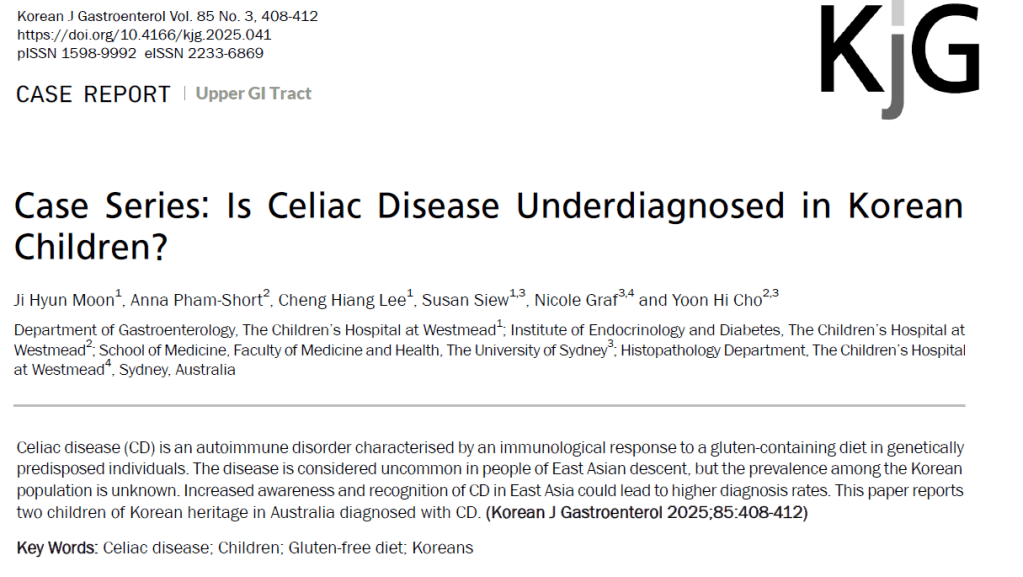
At GEMS Medical Specialists, we are pleased to share a recent publication by Dr. Lee, a paediatric gastroenterologist, on coeliac disease in East Asian children.
Coeliac disease is an autoimmune condition triggered by gluten in genetically susceptible individuals. Although traditionally considered rare in East Asian (Chinese, Japanese, and Korean) populations, emerging cases suggest it may be underdiagnosed. Dr. Lee’s paper, published in the Korean Journal of Gastroenterology, highlights two cases of coeliac disease in Australian-born children of Korean heritage, emphasising the importance of awareness and screening, even in populations where the condition remains uncommon. Children with clinical suspicion of coeliac disease should be screened to ensure timely diagnosis and care.
At GEMS, our specialists are committed to advancing knowledge and providing evidence-based care for all children. If you have concerns about your child’s digestive health, please do not hesitate to book a consultation with our team.
At Gems Medical Specialists, we have been privileged to have Dr. Zahrul Ismadi as part of our team, delivering exceptional care in clinical genetics and metabolic disorders. With mixed emotions, we announce his departure as he embarks on an exciting new chapter as Head of Metabolic Medicine at Perth Children’s Hospital.
Dr. Zahrul’s appointment to this prestigious role reflects his dedication, expertise, and leadership in the field. While we will deeply miss his contributions at Gems Medical Specialists, we celebrate this well-deserved achievement and have no doubt he will continue to make a profound impact on patient care and medical education in Western Australia.
We extend our heartfelt gratitude to Dr. Zahrul for his invaluable service and wish him every success in his new position.
Familial Hypercholesterolemia (FH) is a genetic disorder characterized by high cholesterol levels, specifically very high levels of low-density lipoprotein cholesterol (LDL, or “bad cholesterol”) in the blood, which leads to premature cardiovascular disease.
Individuals with FH have a higher than normal amount of LDL due to a genetic change in one of the genes that control the way cholesterol is processed by the body. As a result, cholesterol accumulates and deposits on the walls of major blood vessels, including the arteries of the heart. Over time, this buildup, known as atherosclerosis, can lead to heart disease and stroke as early as the second decade of life.
Symptoms of Familial Hypercholesterolemia can vary among individuals. Some people may not show any symptoms until they experience a heart attack or stroke, while others may notice fatty skin deposits called xanthomas over parts of the hands, elbows, knees, ankles, and around the cornea of the eye.
FH is a treatable genetic disorder, and with aggressive management, the onset of early cardiovascular diseases can be delayed. Studies have consistently demonstrated that high levels of cholesterol have a cumulative effect over time; therefore, early detection is key. Unfortunately, FH remains underdiagnosed and undertreated in the Australian population. FH should be considered in individuals of all ages if there is a history of premature cardiovascular events (such as heart attack or stroke) in first-degree relatives, clinical features of FH such as fatty deposits around the eyes, tendons, or in the cornea, which can be quite subtle, especially in children. Screening for FH typically involves a blood test for a lipid profile, followed by genetic testing. It is recommended that children are screened from ages 2-5 years.
FH is inherited in an autosomal co-dominant manner. This means that a person will manifest the disorder even with a variation in only one copy of the gene, while the other copy is normal (heterozygous FH). Those with heterozygous FH will have a 50%, or 1 in 2, chance of passing the disorder to their offspring. If an individual inherited a genetic change in both copies of the gene (one from each parent), the disorder will be significantly more severe, including clinical symptoms developing in childhood (homozygous FH). All offspring of individuals with homozygous FH will develop heterozygous FH. FH affects both males and females similarly. The complex inheritance of FH is summarized in the pedigree below:
Therapeutic intervention for FH includes a combination of dietary intervention, lifestyle modification, and pharmacological therapy, all of which are complementary to each other. A comprehensive dietary assessment is mandatory to ensure appropriate fat restriction while maintaining essential fatty acids for normal body function. There is an increasing number of medications becoming available to treat FH. The main group of medication is called statins, which lower LDL cholesterol levels. Other treatments may include cholesterol absorption inhibitors and bile acid sequestrants. Novel therapies that alter the function and expression of PCSK9 and APOC3 are also becoming available for adult patients, with clinical trials in children underway. Lifestyle modifications, including a healthy diet, regular exercise, and avoidance of tobacco smoke, are also important in managing FH.
In summary, FH is an underdiagnosed but treatable disorder that requires a multidisciplinary team approach centered around affected individuals. Early diagnosis and treatment can help individuals with FH minimize the risk of premature macrovascular complications and live a healthy and productive life. Regular check-ups and follow-ups with your healthcare provider are key to managing this condition effectively. If you suspect you may have Familial Hypercholesterolemia, please consult with a healthcare provider for a thorough evaluation.
We cordially invite you to the inaugural education meeting at Gems Medical Specialists. This is an opportunity for local medical practitioners to enrich their knowledge and network with peers. Enjoy a pre-meeting drinks and delicious Malaysian buffet, as you mingle with fellow professionals.
Please note that this event is not open to the general public.
Date: Saturday, 9th March 2024
Venue: Gems Medical Specialist, 41 Boronia Avenue, Epping.
RSVP
For RSVP, kindly fill out the online form. For any queries, please reach out to us at reception@gemsmedic.com.
Programme Schedule
5:00 – 6:00 PM: Registration, drinks, and a Malaysian buffet.
6:00 – 7:00 PM: Dr Zahrul Ismadi, a clinical geneticist and metabolic physician, will enlighten us on:
Preconceptions Carrier Screen
Familial Hypercholesterolemia
Pharmacogenomics
7:00 – 7:30 PM: Dr Moureen Wong, a PhD Psychotherapist, will discuss the “worried well” phenomenon and self-regulation training.
7:30 – 8:00 PM: Dr Cheng Hiang Lee, a paediatric gastroenterologist, along with Stephanie Gilroy, a paediatric dietitian, will share insights on Cow’s Milk Protein Proctocolitis.
8:00 – 8:30 PM: Open discussion and drinks.
We look forward to your participation in this event.


 Gems Medical Specialists